Insights · Branding
What Is a Dieline? A Plain-Language Guide for Packaging
If you’re getting a box, bag, label or sleeve printed, someone will ask you for “the dieline” sooner or later. It sounds technical, but the idea is simple, and getting it right is the difference between packaging that folds up perfectly and a pallet of boxes where your logo wraps around a corner.
This guide explains what a dieline is, what’s on one, where it comes from and how designers work with it. It’s based on how we handle packaging design for clients every day.
What is a dieline?
A dieline (also written die line or die-line) is a flat, to-scale drawing of a package before it’s cut and folded. It shows the exact outline the cutting die will follow, every fold, and the areas reserved for glue, so a designer knows precisely where artwork can go.
The name comes from the die itself: a custom steel-rule tool that cuts and creases sheets of paperboard in one press. The dieline is the drawing that die is made from, and your artwork has to line up with it.
What’s on a dieline?
Every printer marks things a little differently, so always follow the legend on your own dieline. Most include:
- Cut lines: the outer edge, where the package is cut out of the sheet. Usually a solid line.
- Fold or crease lines: where the board is scored so it folds cleanly. Usually a dashed or dotted line.
- Glue areas: flaps that are glued during assembly. Ink and varnish are often kept off them so the glue holds.
- Bleed: extra artwork past the cut line so there’s no white edge if the cut shifts slightly. Often around 3 mm (1/8 inch), but use your printer’s number.
- Safe area: a margin inside the cut and fold lines where important text and logos should stay.
- Perforations, windows and inserts: tear strips, cut-out windows and other special features, each marked in its own way.
- Dimensions: the size of each panel, so the design can be checked against the real product.
Where does a dieline come from?
From your manufacturer or printer. They know their equipment, the material thickness and the tolerances they work to, and the dieline has to match the actual cutting die they’ll use. A template downloaded from the internet might look right but be off by a few millimetres, which is enough to put a fold through your product name.
If you don’t have a dieline yet, ask your manufacturer for it with your product’s size, the material and the structure you want (a tuck-end box, a pouch, a label of a given size). If the structure is new, a structural packaging designer or the manufacturer will create one, often with a plain white sample you can test with your product.
How designers work with a dieline
- Place the supplied dieline on its own locked layer, exactly as received, at 100% scale.
- Plan each panel for how it will be seen: the front on shelf, the sides when stacked, the top when shopped from above, and the back where people read the details.
- Extend backgrounds into the bleed and keep text and logos inside the safe area.
- Keep barcodes, small type and key claims off folds, seams and glue flaps.
- Set the dieline in the file the way the printer asks (often as a named spot colour set not to print) so it guides the cut without appearing on the finished pack.
- Print a mockup at actual size, cut and fold it, and test it with the real product before approving the proof.
Common dieline mistakes that cause reprints
- Designing on a generic template instead of the manufacturer’s dieline.
- Missing or too-small bleed, leaving thin white edges after cutting.
- Text or logos too close to a fold, so they wrap around an edge.
- Artwork that reads correctly flat but ends up upside down once folded, usually on tuck flaps and back panels.
- Ink or varnish on glue areas, so the box doesn’t hold together.
- Barcodes placed over a fold or seam, where scanners can’t read them.
- Approving a screen proof without folding a physical mockup.

01Packaging · Box design
Box design that fits the product
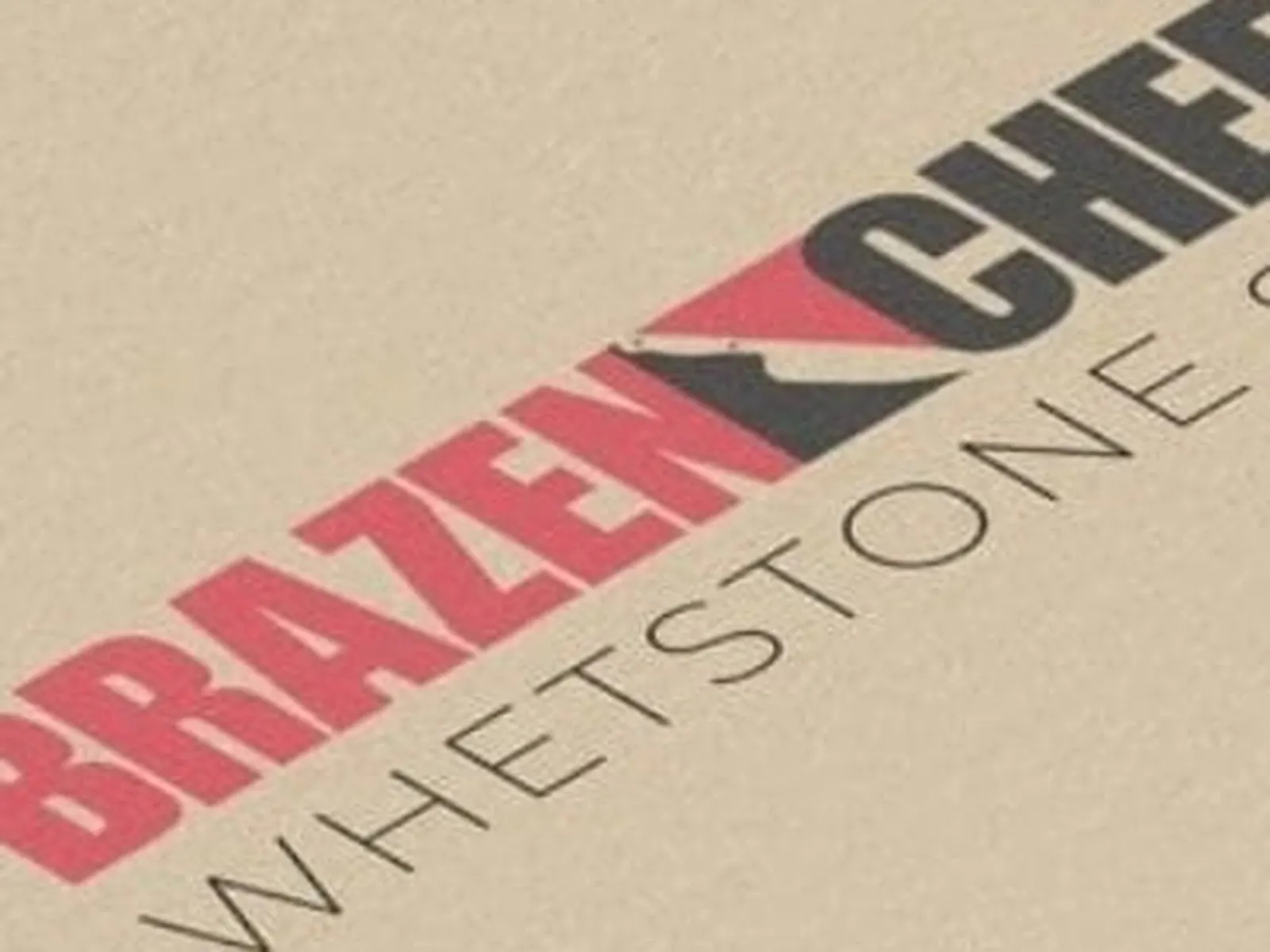
For Brazen Chef’s whetstone knife sharpening set, sold on Amazon, we explored several box design directions. Each one had to work on the same box structure, with the brand, product name and key details placed so they read clearly on the front and stay clear of folds and edges.
02Packaging · Bilingual bags
Two languages on every bag
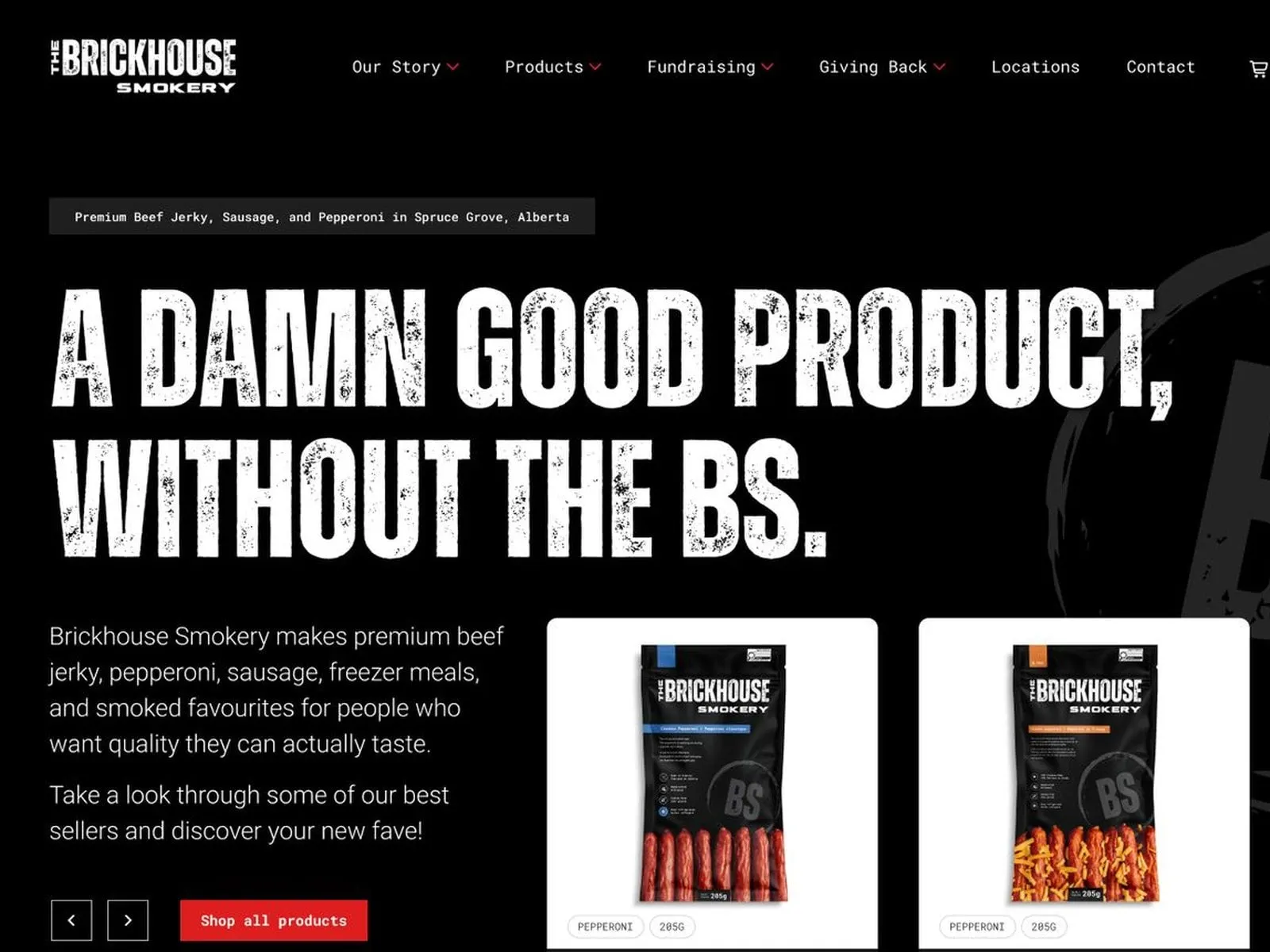
The Brickhouse Smokery’s bags carry English and French on every pack. Bilingual packaging puts even more pressure on the layout, because two languages have to fit the same panels without crowding, so planning space against the real template matters from the start.
More on packaging design
Guides from our packaging work, plus the service itself.
Ready to build something worth envying?
Frequently asked questions
What is a dieline in packaging?
A dieline is a flat, to-scale template of a package that shows where it will be cut, folded and glued, plus the bleed and safe areas. Designers place the artwork on top of it so the printed design lines up with the finished package.
Who makes the dieline?
Usually your packaging manufacturer or printer, because it has to match the cutting die and material they’ll use. For a new structure, a structural designer or the manufacturer creates one, often with a plain sample to test.
Is a dieline the same as a template?
A template is any layout guide. A dieline is the specific one your manufacturer will cut to. Generic templates can be close but not exact, so always design on the manufacturer’s dieline.
Does the dieline print on the package?
No. It guides the cutting and folding only. It’s usually set in the file as a separate, non-printing spot colour or layer, following your printer’s instructions.
How much bleed does packaging need?
Often around 3 mm (1/8 inch), but printers and packaging types vary, so use the bleed your printer specifies on the dieline.
Have a product that deserves better packaging?
Keep reading